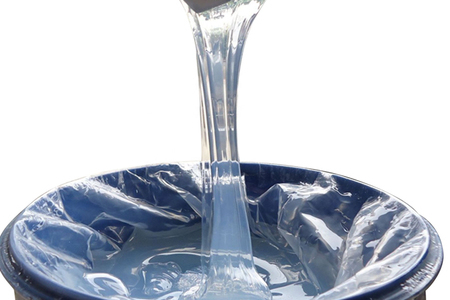
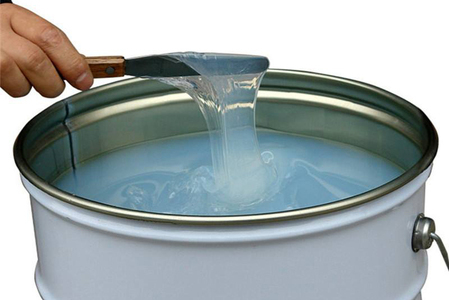
This 100:2 two-component liquid silicone belongs to the category of condensation-type mold silicones. When Components A and B are mixed at a weight ratio of 100:2, a cross-linking reaction occurs, and after curing, it forms an elastomeric material with a certain hardness. This product boasts excellent fluidity, low viscosity for easy operation, and after curing, it exhibits resistance to burning, high temperatures, corrosion, and solvents. Additionally, it features high tensile and tear strength, low linear shrinkage, and can be used for multiple mold-turning cycles.
It is an elastic mold material for pouring gypsum, cement, POLY-RESIN, PU, AB resin, and ABS materials. It is widely used in the production and replication of products such as oil clay works, toys, gifts, reliefs, Buddha statues, urban sculptures, cement products, handboards, automobile models, home appliance models, and soap molds.
|
Product Model |
MY 3800/3900 |
MY 3805/3905 |
MY 3810/3910 |
MY 3815/3915 |
MY 3820/3920 |
MY 3825/3925 |
MY 3830/3930 |
|
Color |
White/Semi-transparent |
White/Semi-transparent |
White/Semi-transparent |
White/Semi-transparent |
White/Semi-transparent |
White/Semi-transparent |
White/Semi-transparent |
|
Hardness (A) |
0±2 |
5±2 |
10±2 |
15±2 |
20±2 |
25±2 |
30~35 |
|
Viscosity (cps) |
8000~10000 |
8000~10000 |
8000~10000 |
15000±2000 |
20000±2000 |
23000±2000 |
25000±2000 |
|
Tear Resistance (KN/m) |
5±2 |
8±2 |
10±2 |
15±2 |
20±2 |
23±2 |
22±2 |
|
Tensile Strength (Mpa) |
2.03 |
2.12 |
2.46 |
2.56 |
2.57 |
3.98 |
3.17 |
|
Elongation (%) |
580±50 |
550±50 |
500±50 |
450±50 |
420±50 |
400±50 |
300±50 |
|
Working Time (Min) |
15~25 |
15~25 |
15~25 |
15~25 |
15~25 |
15~25 |
15~25 |
|
Full Curing Time (h) |
8~10 |
8~10 |
8~10 |
8~10 |
8~10 |
6~8 |
6~8 |
|
Shrinkage Rate (%) |
≤0.3 |
≤0.3 |
≤0.3 |
≤0.3 |
≤0.3 |
≤0.3 |
≤0.3 |
Make the mold frame: Choose a material with a smooth surface (such as acrylic sheet) to make the mold frame.
Fix the master mold: Place the master mold into the frame and fix it securely according to actual conditions.
Spray release agent: Spray a small amount of release agent on the surface of the master mold and the inner wall of the mold frame.
Mix materials: Mix the silicone and curing agent at a weight ratio of 100:2 and stir thoroughly until uniform.
Vacuum defoaming: Perform vacuum treatment to remove air bubbles from the mixture.
Pour silicone: Pour the defoamed silicone into the mold frame.
Optional vacuum treatment: Place the entire mold frame into a vacuum machine for further vacuuming if necessary, based on actual conditions.
Demold after curing: Wait for the silicone to cure completely, then remove the mold.
Take the required amount according to the manufacturer’s instructions and weigh it accurately. Remember that the ratio is by weight, not by volume. After mixing Components A and B, stir them fully until uniform to avoid non-curing or incomplete curing.
Before large-scale use, conduct a small-scale test first to master the product’s usage skills and prevent errors.
When mixing Components A and B, stir in the same direction. When pouring the silicone, hold the container high and pour it slowly onto the same position of the master mold, allowing the silicone to flow and level naturally on the master mold. This extends the flow time of the silicone and thereby reduces air bubbles.
To accelerate the curing time, you can increase the temperature after the liquid silicone has initially cured. Do not raise the temperature immediately after pouring the silicone, as this will cause the curing agent to volatilize and result in failure to cure.