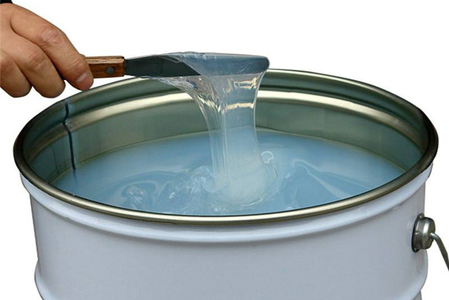
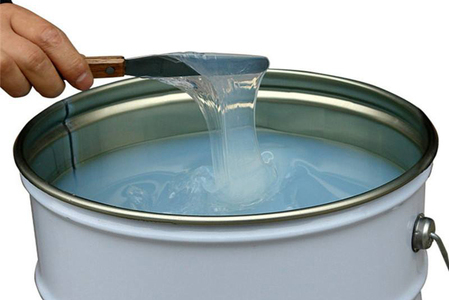
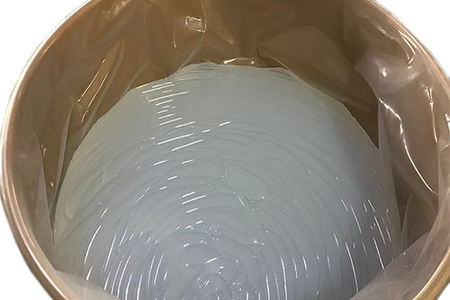
This 1:1 two-component liquid silicone is an addition-cure liquid mold silicone. It can be used for mold baking in ovens, with high temperature resistance up to 250℃, and can be used stably for a long time within 200℃. It is suitable for the production and simulation of soft silicone rubber products such as adult products, human organs, human shapes, human mannequins, breast pads, and shoulder pads. It is also an excellent material for making food molds, candy molds, cake molds, and soap molds.
Non-sticky, flexible, easy to clean, and fast cooling
Resistant to fading and deformation
|
Product Model |
Color |
Hardness (A) |
Viscosity (cps) |
Tear Resistance (KN/m) |
Tensile Strength (Mpa) |
Elongation (%) |
Working Time (Min) |
Full Curing Time (h) |
Shrinkage Rate (%) |
|
MY-3500 |
Semi-transparent |
0 |
5000±1000 |
≥2 |
2.0 |
≥500 |
30~40 |
4~6 |
≤0.1 |
|
MY-3505 |
Semi-transparent |
5±2 |
5500±1000 |
≥4 |
2.5 |
≥550 |
30~40 |
4~6 |
≤0.1 |
|
MY-3510 |
Semi-transparent |
10±2 |
6000±1000 |
≥12 |
3.0 |
≥500 |
30~40 |
4~6 |
≤0.1 |
|
MY-3515 |
Semi-transparent |
15±2 |
8000±1000 |
≥13 |
3.2 |
≥450 |
30~40 |
4~6 |
≤0.1 |
|
MY-3520 |
Semi-transparent |
20±2 |
10000±1000 |
≥16 |
3.5 |
≥400 |
30~40 |
4~6 |
≤0.1 |
|
MY-3525 |
Semi-transparent |
25±2 |
15000±1000 |
≥16 |
4.0 |
≥420 |
30~40 |
4~6 |
≤0.1 |
|
MY-3530 |
Semi-transparent |
30±2 |
20000±1000 |
≥17 |
4.5 |
≥350 |
30~40 |
4~6 |
≤0.1 |
|
MY-3540 |
Semi-transparent |
40±2 |
22000±1000 |
≥17 |
4.5 |
≥330 |
30~40 |
4~6 |
≤0.1 |
|
MY-3550 |
Semi-transparent |
50±2 |
25000±1000 |
≥15 |
4.6 |
≥170 |
30~40 |
4~6 |
≤0.1 |
|
MY-3560 |
Semi-transparent |
60±2 |
45000±1000 |
≥14 |
4.8 |
≥150 |
30~40 |
4~6 |
≤0.1 |
Mixing: Mix Component A and Component B at a weight ratio of 1:1 and stir thoroughly until uniform.
Defoaming: For applications with high requirements, vacuum defoaming treatment should be carried out; otherwise, the produced mold will have air bubbles.
Pouring: Pour the well-mixed liquid silicone into the mold frame.
Take the amount according to the manufacturer's instructions and weigh accurately. Remember that the ratio is by weight, not by volume. After mixing Components A and B, they must be fully stirred until uniform to avoid non-curing or incomplete curing.
Before large-scale use, conduct a small-scale test first to master the product's usage skills and avoid mistakes.
When mixing Components A and B, stir in the same direction. When pouring the silicone, hold the container high and pour it little by little onto the same position of the master mold, allowing the silicone to flow and level naturally on the master mold. This can extend the flow time of the silicone and thereby reduce air bubbles. Generally, products with a hardness exceeding 20 require vacuum treatment before use.
When making the mold frame, if 502 glue is used, wait for half an hour or place it in an oven at 50℃ for 10 minutes before pouring the silicone. This prevents the 502 glue from reacting with the silicone (causing "poisoning") and leading to non-curing.
The 1:1 addition-cure series products will undergo a "poisoning" reaction with compounds such as tin, phosphorus, ammonium, chlorine, carboxylic acid, thiol, and hydroxyl groups. During use, contact with such compounds must be prohibited to avoid non-curing.
To accelerate the curing time, a temperature increase method can be adopted to speed up the curing rate of the silicone.